• Free Will, Determinism, and the Logic of Accountability

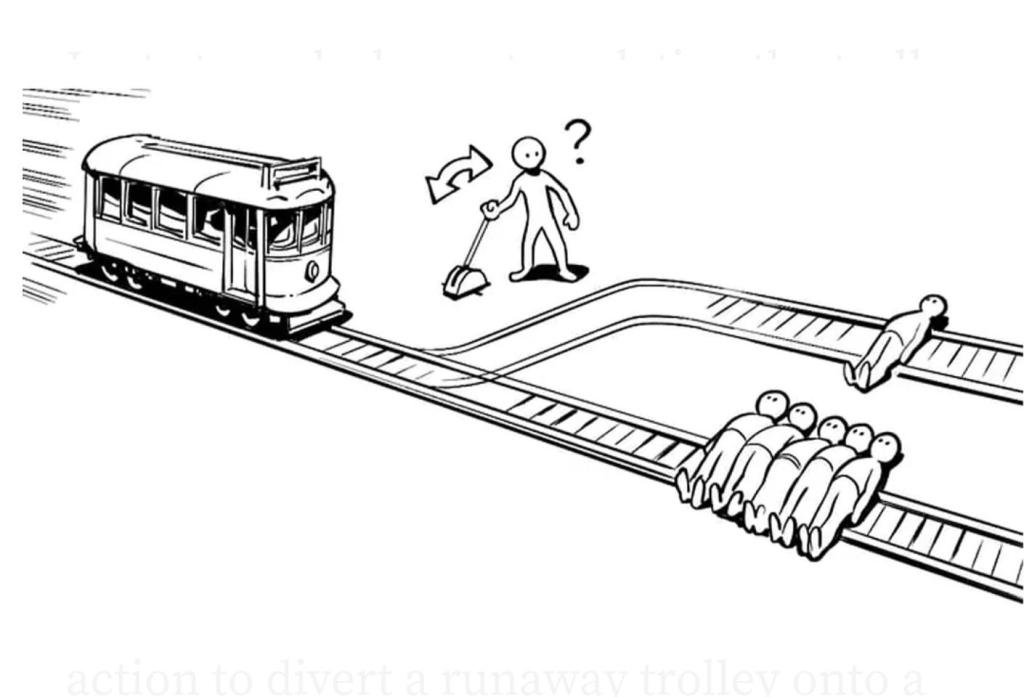
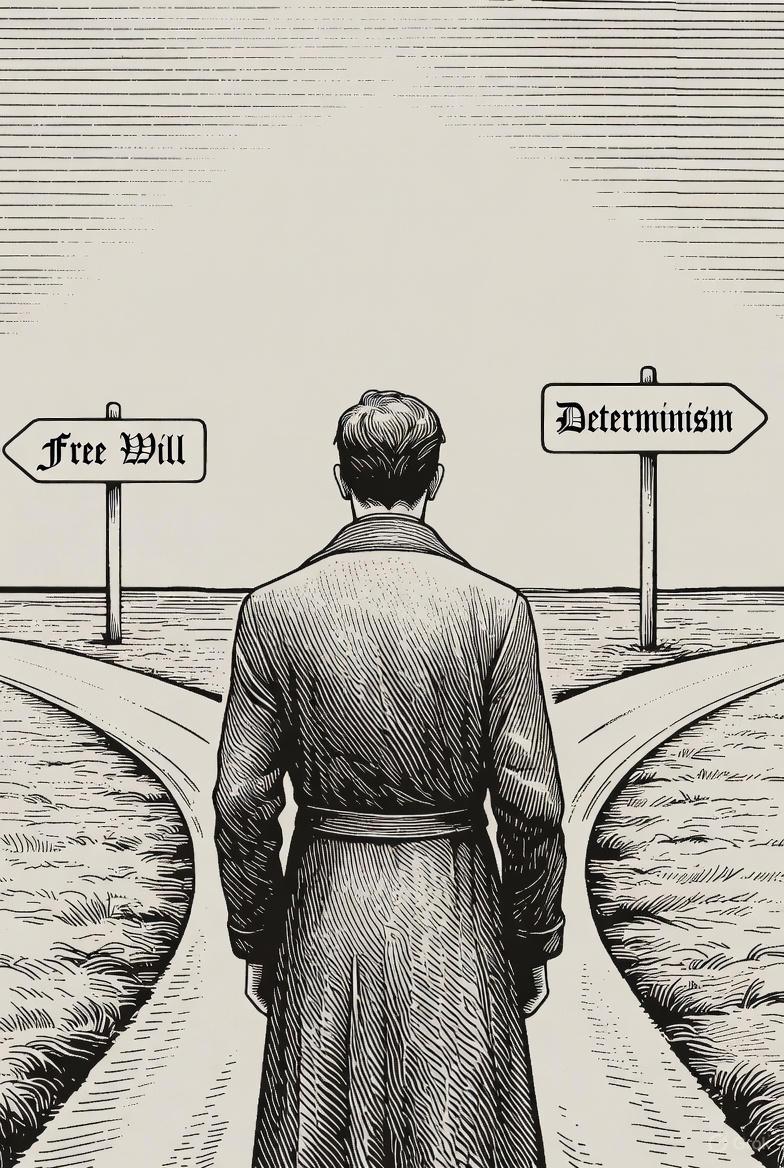
    Do we have free will? For many, “free will” is the notion that we have the ability to make our own decisions, and the freedom to act upon them. This is often just an acknowledgment of will itself, not a claim that our will is completely free. Free from what – determinism, external coercion, a higher power? A deeper dive into that question asks where that will comes from in the first place, and if there are ever legitimate exceptions to the responsibility we attach to the principle of free will.

    Acquired Sociopathy

    In 2012, a man with no criminal record suffered a severe traumatic brain injury in a motor vehicle accident, with focal damage to the prefrontal cortex. Within a month, he committed an impulsive murder during a minor altercation. Neuropsychological tests showed significant deficits in moral reasoning and impulse control directly attributable to the accident. Does this mean he should be treated differently? Was the act of murder completely of his own free will, or were there circumstances beyond his control that contributed?

    In 2000, a 40-year-old Virginia school teacher with no prior history of sexual deviance suddenly developed intense pedophilic urges. He began collecting child pornography and inappropriately propositioning women, among them, his own stepdaughter. He was convicted and sent to prison, where he complained of headaches. An MRI revealed a large orbitofrontal tumor. After surgical resection of the tumor, the pedophilic behavior vanished completely. Seven months later, the behavior returned, and tests revealed that the tumor had regrown. Following a second resection, the behavior disappeared again. This demonstrates, once again, that physical characteristics of the brain can dramatically alter mental function.

    Cases like these (and dozens like them) have established the existence of a syndrome known as acquired sociopathy (sometimes called frontal-lobe syndrome), in which damage to the prefrontal or orbitofrontal cortex dramatically lowers the threshold for impulsive violence or sexual deviance in previously normal individuals. This concept has been used in court to mitigate punitive measures, supporting the belief that defendants may not bear full moral responsibility for their transgressions, potentially caused by a pathological condition beyond their control.

    Disruptors in Pre-birth or Early Life

    Brain anomalies are not limited to tumors and physical accidents, though. Numerous congenital and early-life conditions are strongly associated with violence and anti-social behavior.

    Conditions present at birth or developed very early, such as malformations or damage to the orbitofrontal/ventromedial prefrontal cortex, early white-matter disorder, amygdala dysfunction, and fetal alcohol spectrum disorder, all correlate with significantly higher predispositions to impulsive aggression.

    We label certain patterns as “conditions”, but they’re simply variations along a spectrum, visible only because they stand out from the statistical norm.

    A Product of Nature

    Genetics and the prenatal environment shape our neural architecture, and thus our capacity to process information, regulate emotions, and inhibit impulses; long before we have any awareness or agency. For example: several studies have demonstrated that IQ is mostly heritable in adults. A person with a 70 IQ cannot “will” themselves to an IQ of 130 any more than a 5’5″ person can will themselves to 6’5″. They didn’t get a vote in their IQ potential at birth, either.

    The same principles apply to temperament. Tendencies toward aggression, neuroticism, preference in taste of food, even what time we go to bed all show measurable genetic influence. While the list of genetic variation is nearly endless, the key point is simple: a substantial portion of who we are, how we think, and the paths we are likely to take, is shaped by the biological equipment we received in-utero – equipment over which we had zero control.

    Environmental Influence

    That said, genetics is not destiny. Much of who we are is in response to the environment we experience throughout our lives. Studies of identical twins raised apart show that significantly different life experiences produce markedly different personalities, habits, and values, despite having identical DNA. Language acquisition demonstrates how experiences at a young age can affect outcomes. A child immersed in a new language before puberty almost always develops an accent nearly indistinguishable from the native tongue, whereas an adult learner rarely does, regardless of the effort they invest. Early trauma, neglect, and other experiences can have equally significant effects on brain function later in life.

    The Unchosen Foundations of Choice

    We like to think we freely choose our actions, but every choice is made by a brain we didn’t design, shaped by genes we didn’t pick, and experiences we didn’t control. That’s why nearly every religious tradition and ancient wisdom warns against the perils of pride. If our abilities and inclinations ultimately come from gifts we never gave ourselves, taking credit begins to look like arrogance, and a moral plagiarism that demands applause instead of gratitude.

    The same logic cuts both ways. If we withhold pride from the lucky because they didn’t earn their good fortune, it’s only fair that we withhold contempt from the unlucky, because they didn’t choose their deficits either. That recognition doesn’t remove accountability, it simply asks us to replace self-righteousness and scorn with something closer to moral empathy.

    Back to the Car Accident – Should it Change Our Perspective ?

    In cases where people commit violent acts after experiencing traumatic brain injuries, most of us have some level of consideration for their condition. We will perhaps view these situations differently from those in which the assailant didn’t undergo a dramatic re-wiring of the brain. The fundamental problem with this assessment is to assume that an act of “re-wiring” is somehow more profound than wiring that was faulty in the first place. A man who acts violently because he has poor impulse control (or any other character defect) will always have an origin for his shortcomings, whether it be the biological hardware he was born with, the experiences he had in life, or (most likely) both. Do we see someone who was born without legs differently from someone who lost their legs in a accident? Would we expect the first man to walk any more than we would expect the second man to?

    Examples of situational influence are endless in life. Studies have shown that victims of childhood sexual abuse are up to 8 times more likely to perpetuate sexual abuse in adulthood, and children raised in violent or chaotic households are many times more likely to repeat those patterns themselves. People who grow up around violence, drug use, theft, and other criminal activity are 12-25 times more likely to become involved in criminal acts. Where one person may be lucky enough to have the intelligence or the guidance to avoid these pitfalls, others will not. There exists no negative or destructive expression in humans that cannot be attributed to circumstance or biology. There is a cause for everything.

    A Premise for Action

    Once we acknowledge that people are a product of biology and environment, it becomes difficult to hold anyone accountable for anything. Over-expressed empathy can lead to excusing all poor behavior, presenting a clear problem for society.

    A solution is to start by understanding that these influences are real, powerful, and deeply unfair. Some of us just got a bad ticket in the lottery of life. That reality deserves compassion, but it must never become an excuse. The only question that matters is this: Is tolerating this behavior good for society? If the answer is no (and it almost always is), then we cannot permit it, no matter how tragic the offender’s backstory.

    While this can feel emotionally cold on the surface, it’s actually the most humane path available, and here’s why: Failing to punish misconduct does not merely allow it to continue; it actively breeds more of it. Every unpunished act exposes new people to the very conditions – trauma, normalization, eroded boundaries – that make them likely to repeat the same harm. Each failure to sanction the original offender quietly manufactures both a new victim and, statistically, a future offender. This is known as a positive feedback loop, in which a system’s output amplifies the input, reinforcing and accelerating the cycle. The only way to stop the cycle is to stop the output.

    As the saying goes, life isn’t fair. It’s often, in fact, tragic. Despite our emotional disgust in some people’s behavior, it’s logically appropriate to find some sympathy for even the worst offenders. We may wish things had unfolded differently, but the past is fixed. Think of the familiar trope in zombie films: the hero watches a friend or loved one become infected, then is forced to grapple with the impossible choice of putting them down, or risking becoming a victim themselves. In reality, our choices aren’t so stark. We’re not asked to slay zombies to save the world. We do, however, have a responsibility to preserve and protect what’s good in our world – to stop the infection of destructive cycles, and respond to harmful behavior in consistent, principled ways.

  • The Convenient Myth of the Evil Genius

    Disclaimer: “Nazi sympathizer” is an over-used label, in my opinion. It’s often confused with empathy, and when it is, it inherently suggests that we shouldn’t try to understand the motivations of people who committed some of the worst atrocities in history. I will state, for anyone who is confused, that I do not align with or condone the despicable acts of the Nazi regime. I have no hate or disdain in my heart for the Jewish people who were senselessly murdered under Nazi rule, or any other race or creed of people, for that matter. The intent of this piece is not to minimize or excuse these acts , but to examine the social conditions that were present at the time, and reflect on patterns we see in society today. If we want to avoid a particular destination, it’s helpful to know which roads lead there.

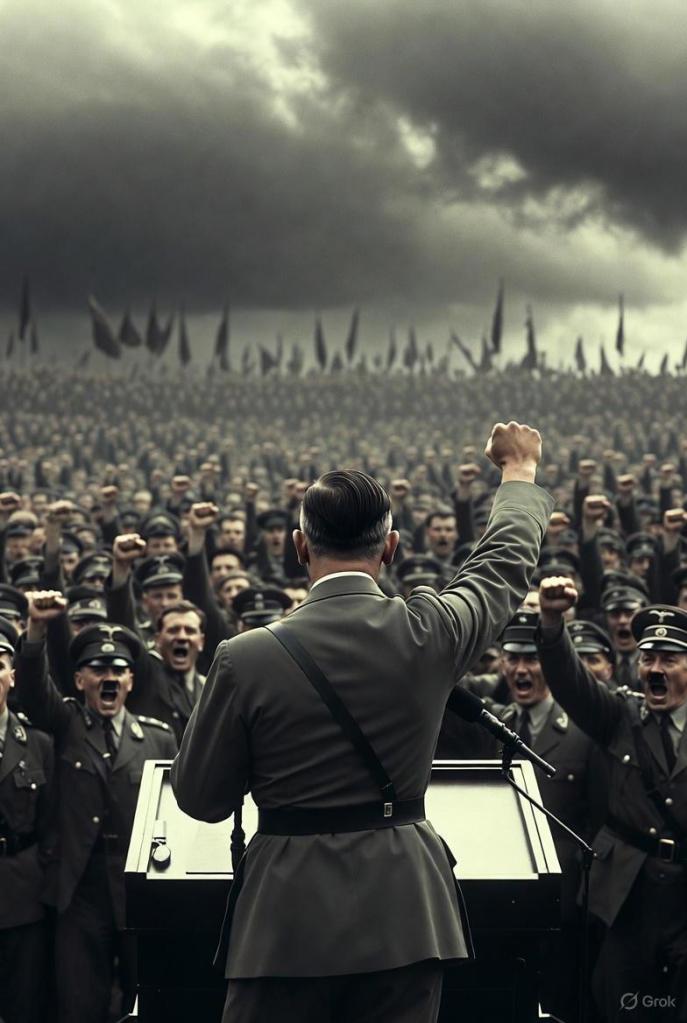
    Hitler is the most universally recognized embodiment of tyrannical evil in the modern world. We are taught to fear the idea of someone like Hitler, who could seize an otherwise good society and lead it into ruin through personal charisma and malice alone. The storyline of one evil man corrupting an innocent nation is comforting, because it locates all the blame in a single monster. It’s also dangerously simplistic and arrogant. It gives far too much credit to one individual and infantilizes an entire population.

    In every other domain of catastrophe (wildfires, plane crashes, financial meltdowns, etc.), we obsess over root causes and contributing conditions. With wildfires, for example, assessments are made about overgrowth, dry conditions, weather anomalies, etc. We don’t just conclude that such a massive, destructive fire must have been started by a uniquely powerful match. In this regard, if we view Hitler as the fire that swept through 20th century Germany, it’s paramount that we examine the forest of dried timber that was the Weimar Republic.

    Peak Social Freedom

    After Germany’s defeat in World War I, the Allies forced the abdication of the Kaiser and replaced the monarchy with a liberal democracy: the Weimar Republic (1919–1933). For a brief moment, Weimar became arguably the most socially progressive society on earth.

    Women gained the vote. Divorce laws were radically liberalized. Artistic expression exploded in ways that shocked the old world. Feminism, contraception, and even abortion entered mainstream conversation. Berlin became the undisputed capital of avant-garde art, cabaret, and sexual liberation.

    Yet this era of “progress” carried a dark underside that turned liberation into a societal powder keg.

    A culture of individualism replaced conformity and collective traditionalism, and relativism gained popularity in universities, leading many to question long-standing moral beliefs. Prostitution was not merely legalized; it became ubiquitous. In the 1920s, Berlin alone had an estimated 100,000-120,000 prostitutes in the city. Pornography flooded the streets. The “New Woman” who could cut her hair short, smoke in public, work, and claim sexual autonomy became an iconic figure, but post-war economic misery and a severe gender imbalance (millions of men died in the first world war) left many women with few viable options to support themselves. Prostitution gained palatability as a means of income in a society that no longer condemned it.

    Women didn’t corner the market on prostitution, though; young men joined the trade too. Berlin’s thriving gay, lesbian, and transgender scenes were among the most explicit and visible in history. By the late 1920s a single news kiosk might carry as many as 30 homosexual publications. In 1919 the gay Jewish physician Magnus Hirschfeld founded the Institute for Sexual Research, which aimed to aggressively promote the growth and acceptance of homosexuality and transgenderism through public education and what was then termed “social engineering propaganda”. The institute performed the world’s first gender reassignment surgeries in 1930 and popularized the idea of a “gender spectrum”; a concept later dismissed as pseudoscience, only to resurface in modern culture decades later.

    Decadence reigned. Nightlife ran on cocaine and morphine. Violent crime soared; homicide rates nearly tripled (from ~4.5 to 11–12 per 100,000). It’s difficult to discern how much of the rise in violent crime was driven directly by the cultural shift, or at least by a specific part of it. Sources vary in regard to the cause of the crime increase, but one factor seems to be indisputable: a significant increase in political murders. Weimar experienced massive waves of protests, demonstrations, and riots during the 1920s and early 1930s. While social liberalism was on the rise, many viewed the establishment as still too conservative. Left-wing groups like the Spartacists tried to ignite a Bolshevik-style revolution; the Bavarian Soviet Republic actually controlled Munich for 4 weeks. Groups like the Freikorps were hired by the democratic government to crush communist uprisings, but were disbanded in 1920-1921 (some members later joined the Nazi SA)

    Economic collapse

    The degradation was not only cultural. Hyperinflation, brought on by severe war debt and reparation payments reached its peak in 1923: A loaf of bread cost 3,000 marks in July, 1.5 million in September, and 3 billion by November. Money literally lost value by the hour. Salaries were paid twice a day so workers could rush out and spend them before prices rose again. The middle class was wiped out overnight.

    A new currency stabilized things in 1924, but the reprieve lasted only until the 1929 Wall Street crash, when American banks abruptly called in short-term loans to Germany. Unemployment skyrocketed past 30%.

    The Nazi Solution

    Into this chaos stepped a party that offered security, order, jobs, moral purification, and national pride. The Nazis did not have to invent widespread hatred of Weimar decadence, they only had to promise to end it. Street crime, pornography, prostitution, drugs, communism, degenerate/nihilistic art, gender experimentation – the Nazis promised to sweep it all away with ruthless efficiency.

    Exhausted and humiliated by widespread social degeneracy and economic misery, millions of ordinary Germans concluded that radical measures were justified if they restored stability and dignity to the nation. On January 30, 1933, Adolf Hitler was appointed chancellor, entirely legally, by a political establishment that believed he was their best option.

    A Repeal of Liberalism

    The recoil against the social tendencies of Weimar began immediately. In 1933, Nazi students destroyed the Institute for Sexual Research. Its entire library, consisting of over 20,000 volumes on sexuality, gender, and homosexuality was burned. Book burnings were done as public demonstrations, with clearly stated intent: symbolic purification of German culture, public demonstration of power and unity, and the creation of a new, uniform national culture. The displays served not only to eradicate opposing ideologies, but also to intimidate and silence the opposition. Other books that were burned included works of the Jewish, Marxist/communists, liberal socialists, and anarchists, as well as any pieces considered sexually explicit and degenerate.

    Blaming Jews

    While the government in Weimar was mostly non-Jewish, Jews (who were less than 1% of the population) were disproportionately represented in media, film and arts, as well as higher education. The Nazis used this to place the blame for social corrosion solely on the Jewish community. They also pushed the “Stab-in-the-back” myth – a conspiracy theory that blamed Jews and leftist politicians for Germany’s surrender in the first world war. Because no enemy soldier had set foot on German soil, and wartime propaganda had hidden the true military situation, millions were stunned by the 1918 armistice, and readily believed the army had been “stabbed in the back” by Jewish revolutionaries and profiteers.

    Parallels with Modern Society

    Are we living in a modern-day Weimar Republic? Not exactly, but there are definitely comparisons to be made. A significant number of the socially progressive ideas being promoted in our society today originated there. Hyper-sexualization, drag culture, transgender studies, identity politics, degenerate art, pornography, extreme sexual liberalization , culture war rhetoric, critical theory, and even some modernist architectural designs are rooted in Weimar. When the Nazis took over and began their social purge of Jews and Marxists in Germany, many of the most influential intellectuals of the time fled to the United States and continued their work in US institutions. The Institute for Social Research, a predominantly Marxist institution in Frankfurt, fled Germany and re-established itself at Columbia University in New York. This phenomenon was not limited to one university, though. It is estimated that, during this time, over 2,000 intellectuals migrated from Germany to the US and cross-pollinated American campuses with Weimar’s blend of Marxism, psychoanalysis, and social critique.

    There are some differences in our society, of course. We are not (at least yet) experiencing economic turmoil on a scale anywhere near what the Germans lived through. Our society is not as young, and hasn’t experienced the gender balance upset caused by the massive German male casualties in the first world war. However, we do have some societal issues that may narrow these differences…

    Young Men in the Modern US

    “He alone, who owns the youth, gains the future.” – Adolf Hitler

    The question is often asked: Why don’t traditional conservatives riot and/or revolt? An obvious answer is that they have too much to lose to risk being arrested, harmed, or face social reprisal. Traditional conservatives have families, jobs, homes, and an established life they don’t want to lose. That is rapidly changing among a younger generation that is farther right than generations before.

    Consider what the social and economic landscape looks like to a young man in the US. Today’s high school graduate likely left adolescence right around 2020, a period in which the country seemingly went crazy. Social interactions were sparse, as COVID lockdowns and school closures left kids at home, with little discourse and connection outside the internet. Identity politics moved to the forefront. Cities were burned, people were attacked, and riots were orchestrated with little consequence, all while young white men were told that they were the problem. A war on “whiteness” became mainstream as media outlets echoed the claims of fringe political actors. This all became a catalyst for young white men to be radicalized into their own form of identity politics.

    At the same time, housing prices skyrocketed, and inflation reached levels unseen in generations. Today, the average first-time home-buyer is 40 years old. Hyper-competitive internet dating and the emergence of platforms like Onlyfans have left many young men feeling inadequate in finding a mate. Statistically, more young men today are sexless and alone than any generation in over 100 years. It’s not a leap to say a large portion of the population may soon have no family, no house, and no established life they are afraid to lose. Social reprisal means little to the incel crowd, who already see themselves as pariahs.

    A Possible Liability

    Whether you personally see our current society as degenerate or not is irrelevant; the foundation is certainly there for many to perceive it that way. The presence of degeneracy in society results in a small portion of the population who enjoy the decadence, while a large portion of the population are unhappy with the breakdown of traditional social roles. Considering the social similarities between our present society and that of the Weimar Republic, a rising class of young men entrenched in identity politics, and increasing financial frustration and hopelessness in younger generations, I think it’s reasonable to be concerned. A political candidate who promises social conservatism combined with fiscal liberalism could easily gain overwhelming support – support that might be willing to overlook some obvious pitfalls.

    Final Thoughts

    A lesson worth taking from all this is one of both humility and responsibility. None of us are immune to the conditions that give rise to destructive authoritarianism. A healthy society therefore needs a certain moderation that its citizens freely choose; not one that must be imposed by the state. Freedom itself is not the problem. The problem is a sudden, extreme disparity between rapid social change and the legitimate human need for continuity, belonging, and meaning. Traditional sources of meaning (family, faith, nation, gender roles) have been core fundamentals in forming the greatest societies in human history. These institutions deserve far more deference than intellectual fashions whose long-term effects remain untested. Great caution, not celebration, is the wiser response when we contemplate trading the proven for the merely novel.

  • When Society Cries Wolf: The Rise of Nick Fuentes

    Before we talk about Nick Fuentes, we need to talk about what happened to Charlie Kirk.

    On Sept 10, 2025, Charlie Kirk was assassinated while talking to students at a Turning Point USA event in Utah. You likely already knew this…

    You likely already know, as well, about the outpouring of hate that we saw on the internet in response to those memorializing CK. Countless politically-motivated posters began spreading anything they could find that might discredit the worthiness of Charlie Kirk. The most common accusations were “He was hateful/spread hate.” “He was a racist.” “He was a woman-hating misogynist.” “He hated black people and immigrants.” “He was a far-right wing Nazi/Fascist.”… While these types of comments have unfortunately become predictable, semantic bleachings in today’s politics, many found them particularly absurd in the case of Kirk. Charlie was a one of the more moderate conservative pundits , and while he received criticism from many on the political left, he was viewed as an outlier in terms of his tolerance, understanding, and compassion by the political right.

    I found myself engaging in an online discussion with an individual during this time. She had posted a video of Charlie addressing Cenk Uygur and said “Look! He’s racist! He literally called this Chinese guy a ch*nk!” I informed her that the man was Turkish, not Chinese, and his name was Cenk (pronounced “Chank”). She followed with another video, which was also inaccurate, then another. Each time, I ignored her threats and ad hominem attacks, and attempted to explain the misleading videos she posted. Her response, in the end, was to lash out at me and inform me that if I didn’t agree with her, that makes me a racist and a misogynist. She did not dispute a single bit of substance I posted, just called me racist and told me she was glad that “racists” like Charlie Kirk are gone.

    After Charlie died, a number of people claimed they would pick up where he left off. Milo Yiannopoulos immediately tweeted “You killed the nice guy, now you get me”. Knowing Milo as a provocateur who has lost relevance in recent years, I rolled my eyes. Nobody would take Charlie’s place. He was a once-in-a-generation person. The more relevant question was: Who would gain his enormous following now that he’s gone? It was during the discussion above that I first realized a logical outcome. I didn’t even feel like I intentionally thought about it; his name just suddenly came to the forefront of my mind…Nick Fuentes.

    Who is Nick Fuentes?

    I can’t refer to Nick Fuentes as a YouTuber, because he’s been banned from YouTube. As a matter of fact, he’s been banned from nearly every form of mainstream social media. He was banned from all relevant forms of online payment processing, banks, and political groups. He was even placed on the no-fly list after attending a rally outside the capitol building on Jan 6. The only way to view Nick’s online show is to find it on Rumble, the self-proclaimed “free speech” platform. The only way to send money to Nick is through bitcoin. He may be the most banned man (of any relevancy) on the internet. It’s clear that people did not want Nick to be heard. Yet, with all these attempts to silence him, Nick Fuentes has been gaining followers at an alarming rate of over 5,000 a day since the assassination of Charlie Kirk. As someone who was once blacklisted from virtually every show on YouTube, Fuentes has since been featured on a number of platforms, including his recent interview on Tucker Carlson, which in just two days has received 4.2 million views.

    The notable thing here is that Nick and Charlie were not aligned. Nick criticized Charlie for receiving funding from Jewish lobbies, and Charlie accused Nick of spreading antisemitism. While Charlie made claims that the black community fell victim to Democratic policies, Nick argued that it wasn’t the policies that were to blame, it was the people. While Charlie suggested that we need more legal immigration and less illegal border crossings, Nick has a more nationalist view of keeping all new immigrants out in belief that their cultures will displace our own, and result in the downfall of the country. Where Charlie was a more moderate conservative, Nick readily accepts the moniker of “far-right”.

    I’m not going to tell you how you should feel about Nick Fuentes. I’ll give him credit for the show he did after Charlie Kirk died, in which he said a lot of good things about the character of his one-time rival, and pleaded with his followers to fight the urge to retaliate in favor of prayer, and “being good Christians”. However, I’ll also point out that regardless of where your assessment of Nick falls, he is most certainly a closer representation of racism, nationalism, and far-right than Charlie Kirk was, by a long shot.

    How does this happen?

    To answer this question, I’ll point to the conversation I referenced earlier, where I was called a racist and a misogynist by a stranger who had absolutely no reason or evidence to make such a claim.

    We’ve all had these conversations. People have become emboldened to accuse anyone of the worst things they can think of, just because that person doesn’t agree with them on some issue. I grew up in a generation where we were taught that people shouldn’t be judged by skin color, creed, gender, etc., but by their actions, and we bought it. We readily accepted this as truth, and most of us still believe it to our core. But, over time, something else happened. We started being told that we weren’t equal, after all. Books like White Fragility suggested that being white, in itself, was an original sin in which we could not deny. We began to experience hate and resentment for what we are, not who we are or what we do. We walked on eggshells in an effort to avoid being accused of being something we know we aren’t. Hateful. Racist. Misogynistic. Fill-in-the-blank-phobic. Some of us found ourselves in jeopardy of losing our jobs or societal status because someone weaponized language and false accusations of character against us. This makes people feel powerless.

    When a man is judged by an intent that is assigned to him by an accuser, instead of what is within him, he is left with no options. It is impossible to validate or invalidate the act of a thought crime without the ability to read minds, so we must measure people by their actions, not how we think they may feel.

    In response to this phenomenon, many will seek refuge. People want to hear from someone who represents them, perhaps stands up for them. For a lot of well-meaning people, this was Charlie Kirk. They saw Charlie as a representative of the idea that we should all be judged by what we do, not what we look like. A voice for those who find themselves fearing reprisal from speaking truth. Someone who believed that love doesn’t always mean agreement, but it does mean doing the right thing, even when it’s not popular. I’m not suggesting that Charlie was infallible; I will concede that he, of course, wasn’t. I do think he was, overall, a positive role model for people who were desperately searching for one, though.

    Charlie’s death resulted in a vacuum among a crowd that felt underrepresented in politics. His college tour wasn’t cancelled, but it wasn’t the same without him. His death was widely politicized by opportunists, and his message was hard to decipher from what remained. People began to look for a new voice. Many found that voice in Nick Fuentes.

    Where do we go from here?

    While I’m not suggesting that Nick is Hitler reincarnate, I will still pose the following question, because it matters : If you call everyone you don’t agree with Hitler, what do you do when an actual Hitler shows up? How do you warn people about the real dangers of fascism when you’ve called half of the country fascists? Who will listen?

    We need to take care when using descriptors against people. While it’s convenient to apply a negative label to those who we disagree with in an effort to invalidate their position, this is an act of insecurity and laziness that leads to further resentment and polarization. Seek to understand those who disagree with you. It will not only serve to humanize those who may seem inhumane, but it will also strengthen your understanding of yourself and your world view.

    Don’t forget to enter your email in the subscribe box near the top of the page to get new blogs as soon as they’re posted!

  • Is a New King on the Horizon?

    The protest network itself, was highly organized; with countless social media ads, legacy media endorsements, and scheduled locations and times posted across the internet days before the event took place. We saw claims of “millions expected to attend” by the very promotors who seemed to be seeding the protests. One couldn’t help but notice: This wasn’t an organic even that transpired due to social outrage leading people to assemble, but an organized call to assembly by high-power political opportunists. The majority in attendance were older, and predominantly female; not the young, inflamed representatives of the next generation, as you might expect to see at a protest of this nature. Perhaps this is due to a higher degree of credulousness, and narrow scope of data input from this demographic (example: cable news/legacy media consumption is almost exclusive to older audiences). In light of this, I view these protesters (many of which were well-meaning) not as bastions of change, but as political pawns, most of which weren’t even aware of why they were there in the first place. I’ll explain…

    Nobody protests their way out of an authoritarian government. Escape from authoritarianism requires an intervention of force, either through revolution from the citizens under rule, or outside actors infiltrating the ruling class. Protests are appeals to the governing class, to demonstrate the needs and desires of the people to the government. In a “free” society, the government can then, in good faith, choose whether and/or how to act in order to satisfy that sector of the population. Those in attendance or support of the “No Kings” protests either do not truly believe they are living in an authoritarian state, or they don’t have a strong sense of what that actually is. So, the question is: Why were they there? They were there because they were told to be. The protests were organized by outside actors as an appeal to get left-wing supporters in the public eye, creating a widespread look of discontent. “No Kings” doesn’t have to be a logical cause or even in line with a palpable reality. It just has to demonstrate a social consensus. In Nazi Germany (no, I’m not suggesting the left is synonymous with Nazis, just demonstrating how this propaganda works), it was mandatory to use the greeting “Heil Hitler” in public. While a simplistic view of this would suggest they were inflating Hitler’s ego by forcing an individual to begrudgingly endorse him, the effect on the individual was not the primary aim. Rather, the intent is known as Normalizing through social pressure or Normalizing ideological compliance, where the result (along with other forms of propaganda) was a majority acceptance of a leader who most would consider unpalatable to the masses. The strategy works, because while people like to think their world view comes from within, it often doesn’t. Societal norms and social acceptance largely drive moral outlook in large groups. For example, consider how quickly and considerably views on gay marriage have changed in the last generation. (Forget what you think the appropriate position is, and just consider how it’s changed, please). The phenomenon works in regard to both support and opposition. Abortion, slavery, incest…even things like dietary/nutritional advice all bend the knee to majority public acceptance and popularity. I could easily digress here, and I likely will at a later date, but for now, just consider the power that comes with the optic of public support or opposition. Groupthink is (sometimes unfortunately) more persuasive than critical thinking. Organizing these protests is a way to create chaos, and an optic of opposition and discontent for the ruling party. The most benign intended effect of this would be to motivate voters in upcoming elections, while more serious interests could target affecting support for some sort of coup, either through nefarious legal actions, assassination, or other uses of force. If you’re on the right and you think things like this are laughable and fruitless, think again. If you’re on the left and you think the protests were about prevention of authoritarianism, think harder.

    Why is this a problem?

    During these protests, we saw videos of numerous direct threats, ignorant and malicious calls to violence and chaos, and a general disregard for any sort of tolerance for opposing views. Multiple protestors had signs, made verbal statements, or even acted out their approval for the murder of people like Charlie Kirk. Use of the term “Nazi” or “Fascist” was widespread and aimed at anyone who opposed, regardless of how unreasonable the claim was. One supporter was captured on video with a sign asking others to join her in killing “Nazis”. When asked who these Nazis were, her response was “Steven Miller… Steven Miller is definitely a Nazi”. If you don’t know Steven Miller, he’s the current US Homeland Security Advisor. He is also a practicing Jew. So now we have people stating intent to kill a Jewish man under the guise of him being a Nazi. You couldn’t find a better example of stupid, misguided malice and hate.

    These could all be seen as the death rattle of a lost society, but what concerns me more than the individual transgressions themselves, are the logical undertones of it all. It’s convenient to just assume that Donald Trump is the catalyst for the outrage we see from the left. Unfortunately, that’s just not the case. Charlie Kirk was not only quite moderate, but perhaps the most kind and loving person I can think of on the political right. It took no time at all for people who disagreed with his political party to paint him as a racist, misogynist, hateful, Nazi, terrible person, etc. (their words). If this is the case, it is clear that there can be no leader of the republican movement who will not suffer the same slanderous fate, which means this will surely continue, well after Trump. Add to this the inevitable retribution that will come from the right as this continues (we’re already seeing criminal pursuit of the left in response to the criminal pursuit of the right during the last administration). The result could be endless scaling of bad behavior on both sides, resulting in continuous entropy of American civilization.

    How does it end?

    One possibility is, ironically, actual authoritarianism. People often attribute one “bad” or evil person as the cause of oppressive authoritarian societies. This is really never what happens. Adolf Hitler, Joseph Stalin, Benito Mussolini, Mao Zedong… all were products of societal corrosion that lead to adoption of radical governing and/or societal degradation and instability. After World War One, German society was in peril. Unmanageable reparations in a war-torn nation and the resulting economic collapse led to left-wing revolutions of communists, spartacists, and socialists that caused further instability, and ultimately lead to the Weimar Republic governing from 1919 to 1933. During this time, the republic experienced unimaginable hyperinflation, social degradation, crime, violence, sexual dysfunction, ethical erosion, and constant threat of political violence. It was this social dysfunction and distrust in government that lead to Adolf Hitler’s rise to power and acceptance in Germany. Hitler was proposed as the answer to these issues, not the cause of them. This is not a statement in support of the Hitler regime, but an illumination of how Germany got there in the first place.

    Another possibility, and one that deviates from historical precedent, is the total adoption of a government by artificial intelligence. While the idea may seem far-fetched, that’s only because it hasn’t happened yet. In a society that no longer respects the boundaries laid by our founding fathers… one that is in constant turmoil as the two parties continue to act against the interest of the people in favor of victory over the other side, is it so far-fetched to consider that input from a third and unbiased party would be off the table? When society can no longer agree on simple universal truths, or the concept that they even exist, how will we ever come to consensus on our own?

    Most of us have always envisioned an AI takeover of society to look like something out of a Terminator movie. A war between humans and machines, either ending in our extinction, or in some perpetual struggle of survival. Is it possible that we install this new reality willingly?